
Cable vs Glass vs Iron Railing for Tri-Valley Homes
Three good materials, three different trade-offs
Cable vs glass vs iron railing is the question we hear most from Tri-Valley homeowners, and there is no single winner. Each material solves a different problem. Cable keeps a view open at a moderate price. Glass gives the cleanest sightline and a wind break, at a premium. Iron gives strength, a traditional look and the widest design range.
What tips the decision here is local: long hot summers, ridgeline views toward Mt. Diablo and Las Trampas, active HOAs, families with young kids, and fire maps that were redrawn in 2025. Here is how each material handles those conditions, followed by ideas for mixing them on one deck. Prices below are installed ranges for 2026; your exact number depends on footage, corners, stairs and access.
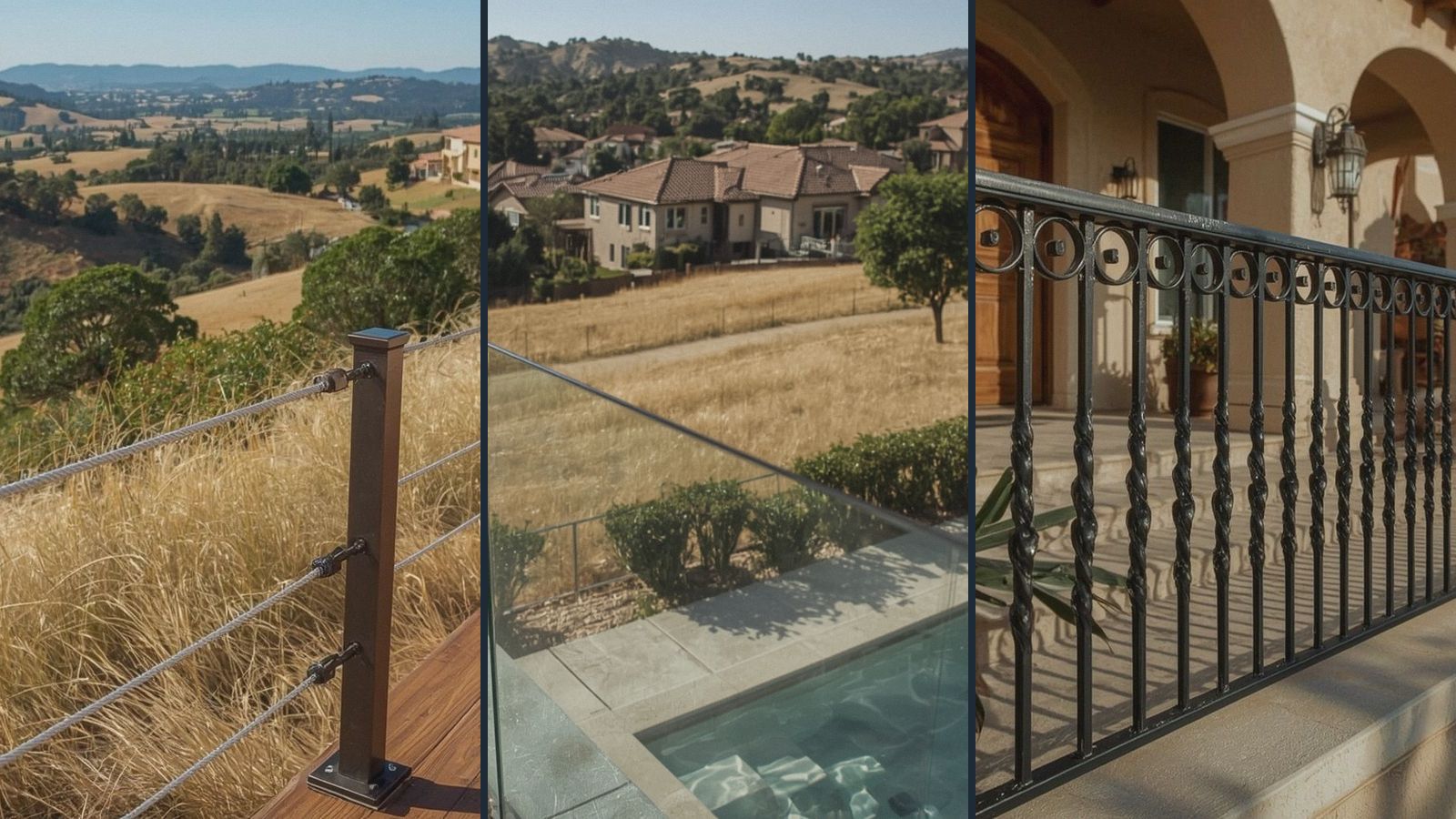
Side-by-side comparison
| Factor | Cable | Glass | Iron |
|---|---|---|---|
| Installed cost per foot | $75–$260 | $150–$600 | $65–$135 standard |
| View | Very open, thin lines | Most open | Pickets break the view |
| Summer heat and sun | Stainless shrugs off sun; re-tension periodically | Glass is stable; dust shows | Powder coat over zinc primer needed |
| Combustibility | Noncombustible metal | Noncombustible glass and metal | Noncombustible metal |
| Climbing risk for kids | Horizontal lines can act as footholds | Nothing to climb | Vertical pickets are hard to climb |
| Maintenance | Tension checks, wipe-downs | Regular cleaning | Touch up chips in the finish |
| HOA acceptance | Often fine on modern homes; ask | Often fine; ask about reflectivity | Widely accepted on traditional homes |
Planning a railing project in San Ramon or the Tri-Valley? We measure on site for free and give you a written range before anything is fabricated.
Views of Mt. Diablo and the ridgelines
If your deck faces Mt. Diablo, the Dougherty Hills or the Las Trampas ridge, the railing sits directly in your line of sight every time you sit down. That is where cable and glass earn their price.
Cable railing uses 1/8 to 3/16-inch 316 stainless aircraft cable, set about 3 inches apart so a 4-inch sphere cannot pass. From a chair, the cables mostly disappear against the hills. Glass railing uses tempered or laminated panels in a base shoe or on standoffs, and it is the only option with no lines at all. On windy hilltop decks it also blocks breeze, which is welcome on some evenings and less so in July.
Iron blocks more of the view, but a slimmer picket and wider top rail can soften that. For a front porch or a balcony facing the street, iron's look often matters more than the sightline.
Heat, sun and the long dry season
July highs run around 80 to 81 degrees in San Ramon and in the mid-80s in Danville, Alamo and Pleasanton, and Walnut Creek reports an average July high of 89. The dry season stretches from about mid-June into October. That sun is hard on finishes.
Stainless cable and its fittings are not painted, so there is nothing to fade, but cables can lose some tension over time and should be checked and re-tensioned as needed. Glass does not fade, though dust and sprinkler spots show quickly. Iron depends entirely on its coating. Oven-cured powder coat over a zinc primer, or hot-dip galvanizing under the powder coat, is what keeps iron from chalking and rusting. Lighter colors stay cooler to the touch on hot afternoons; dark metal railings in full sun can get uncomfortably warm.
Kids, pets and the ladder effect
Horizontal cables meet the 4-inch sphere rule when spaced and tensioned correctly, but some parents worry that a climbing child can use them as rungs. That concern is real enough to weigh. If you have toddlers who climb everything, glass or vertical iron pickets remove the foothold entirely. Some homeowners split the difference: glass or iron where kids play, cable on the far side of the deck where the view matters most.
For small dogs, all three work if built to the 4-inch rule; a very small pet can squeeze through gaps that pass code, and glass is the only option with no gap at all. Whatever you choose, confirm with your building department and HOA whether any local restrictions apply to horizontal infill.
Wildfire and the 2025 fire maps
All three railings are noncombustible, which matters because a deck rail sits right at the edge where wind-blown embers land. That is a real advantage over wood rails, which dry out and check in our summers.
The state redrew its fire hazard severity maps in 2025. Parts of Danville are mapped Very High. San Ramon has no Very High areas, though parts of eastern Dougherty Valley are mapped High. Dublin, Pleasanton and Walnut Creek have no Very High zones but substantial High and Moderate acreage. The Diablo and west Alamo hills are State Responsibility Area High. Check your address on the State Fire Marshal map viewer at osfm.fire.ca.gov/fhsz. Stricter wildfire building rules apply mainly to new buildings in certain zones, so confirm with your building department. Our wildfire-resistant railing guide goes further.
Mixing materials on one project
You do not have to pick just one. Some of the best-looking Tri-Valley decks combine materials, each where it works hardest:
- Steel posts with cable infill. Powder-coated steel posts and top rail carry the loads and the color, while cable keeps the view open.
- Glass on the view side, iron on the rest. Pay for glass only along the run that faces the hills.
- Matching iron on stairs, gates and rails. A deck rail that matches a custom gate and the front-step handrail ties the exterior together.
Because we fabricate in our own shop, mixed systems share one drawing, one finish color and one installation crew, which keeps them consistent.
HOAs, upkeep and choosing by budget
Many Tri-Valley HOAs require architectural review before any exterior railing changes, and some favor a specific color or style. Bring a drawing and a finish sample, and get approval in writing before ordering. Iron in black or bronze is the safest bet on traditional elevations; cable and glass often suit contemporary homes, but ask first.
On budget: iron is usually the lowest-cost custom option, cable is the middle tier, and glass is premium. Powder-coated aluminum is worth a look too if you want the iron look with less weight and a lower price. To see options in person and get a firm number, call (925) 438-6219 or book a free estimate.
FAQ
Questions, Answered
Straight answers on cost, code, permits and materials. Still unsure? Call and ask.
Is cable railing legal in California?
Yes, cable railing is used throughout California when it meets the guard rules: 42 inches tall where the walking surface is more than 30 inches above grade, and no opening that lets a 4-inch sphere pass. That requires correct cable spacing, posts about 4 feet apart and proper tension. Confirm any local restrictions with your building department and HOA before you order.
Which railing is best for a view of Mt. Diablo?
Glass gives the most open view because there are no lines in the way, and cable is a close second at a lower cost. From a seated position, thin stainless cables mostly disappear against the hills. Iron is strong and attractive but its pickets interrupt the sightline more. Many view decks combine glass or cable on the view side with iron elsewhere.
Which railing material needs the least maintenance?
Well-finished iron and aluminum need the least routine attention: a rinse and an occasional touch-up of any chips. Cable needs periodic tension checks and wipe-downs of the stainless. Glass needs the most frequent cleaning because dust and water spots show easily during the long dry season, although the panels themselves do not fade or corrode.
Is glass railing safe with kids?
Glass railing is often the most child-friendly option because there are no gaps and nothing to climb. Panels must be tempered or laminated safety glass, and the system must be anchored to resist the required loads. Laminated glass has the added benefit of staying in place if a panel cracks. We size the glass and hardware for each project.
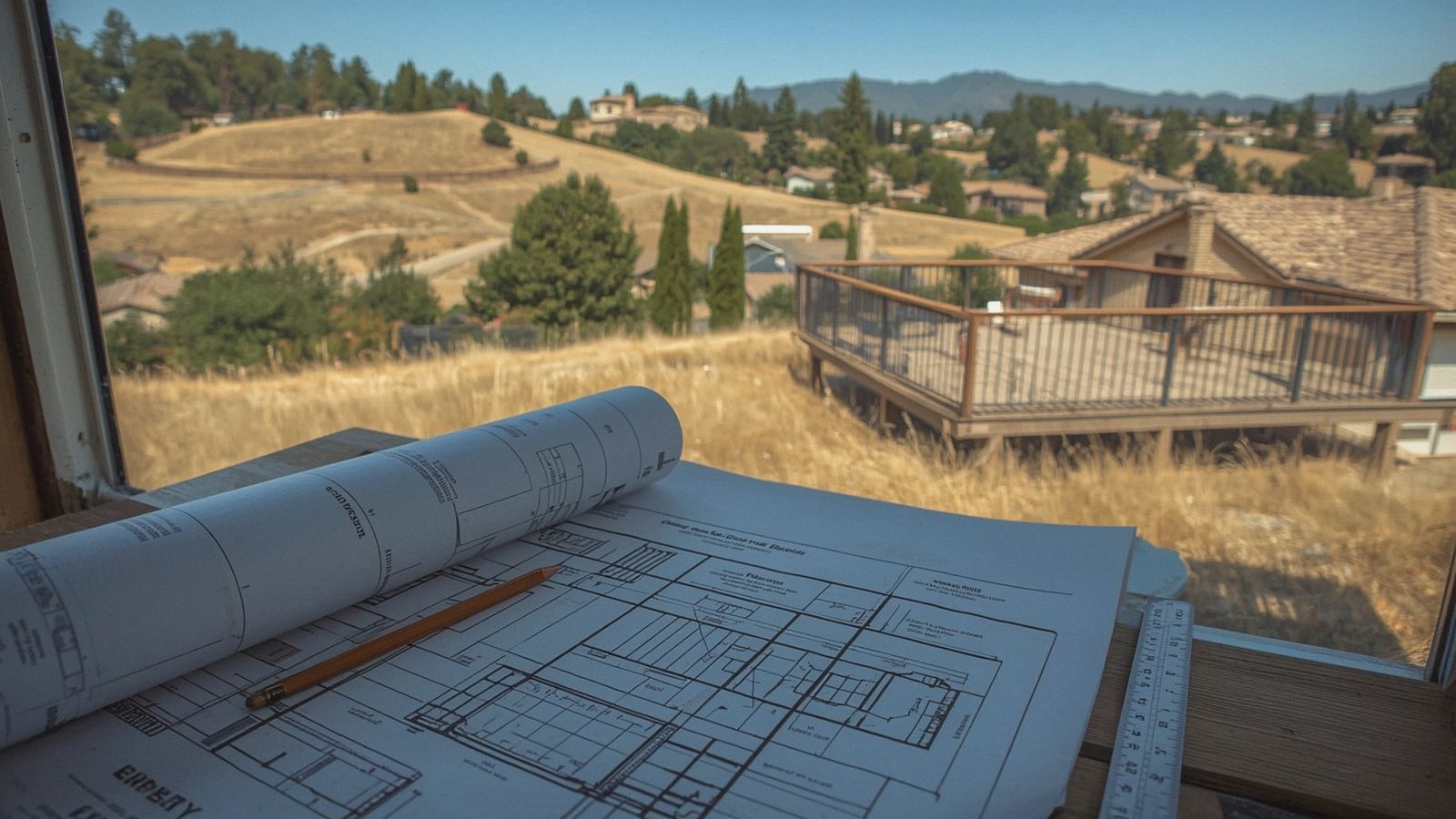
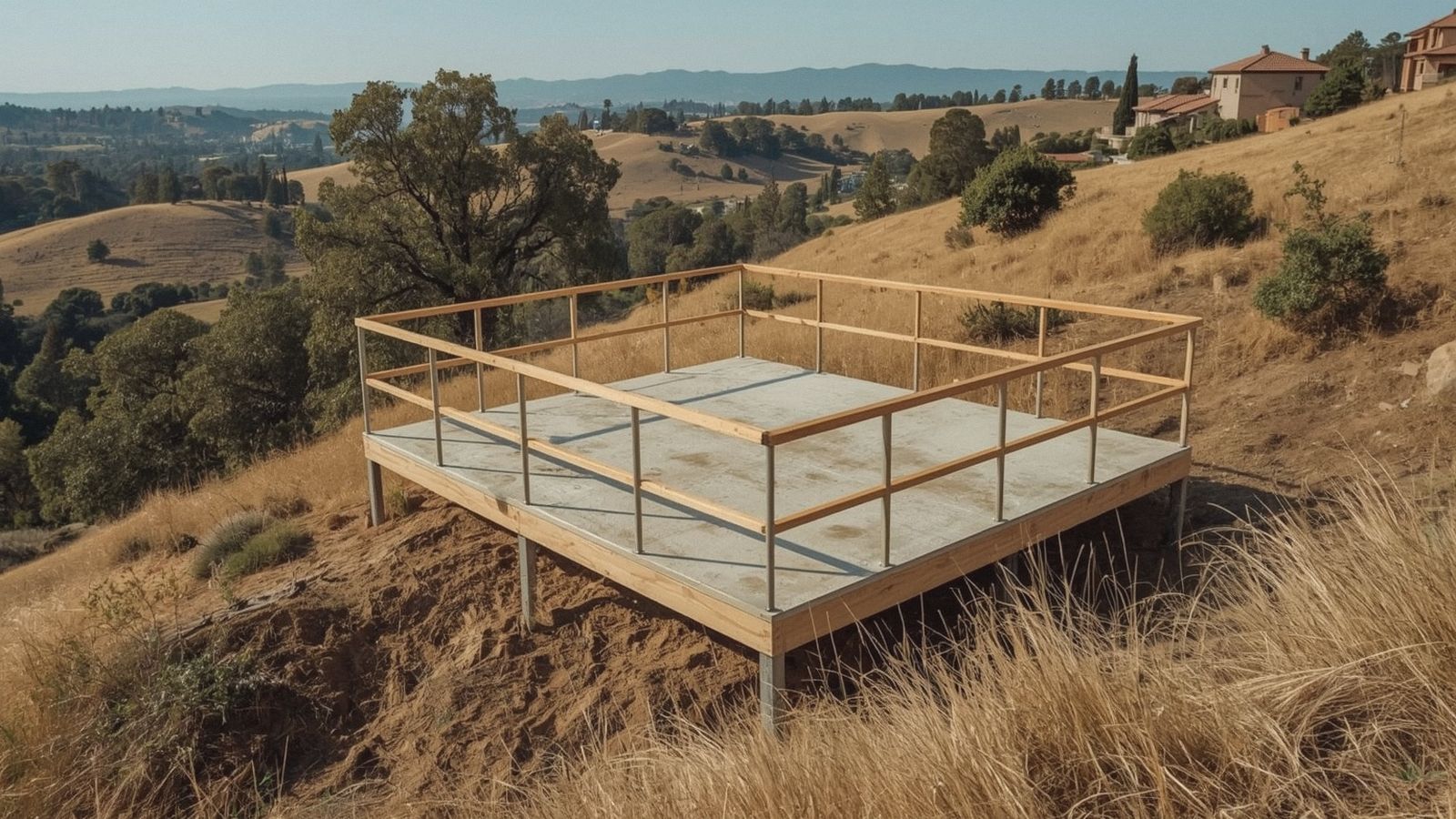
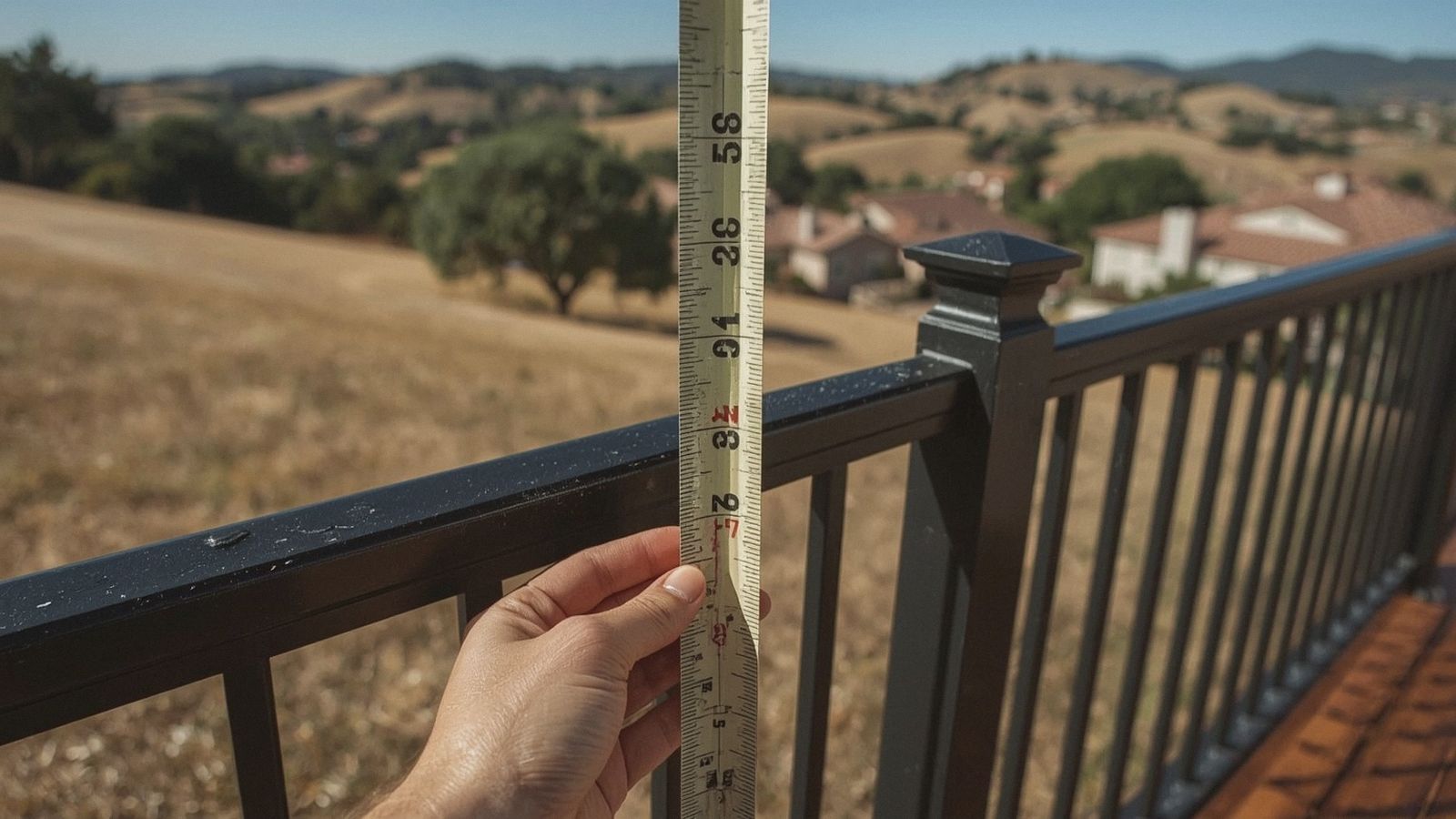
Need Help in San Ramon?
San Ramon Custom Railing builds custom iron, cable, glass and aluminum railings across San Ramon, CA and the Tri-Valley. If this guide answered your question, the next step is a free on-site measure and a written range. See everything we do on our homepage, or reach out now.