
Fence Contractor in San Ramon, CA | Metal & Privacy Fences
Measured free. Built to the city's fence rules.
Horizontal slat privacy fences, steel and aluminum picket fences, view fences and pool enclosures, built with the same welds, posts and powder coat as our railings and sized to San Ramon's fence height rules.
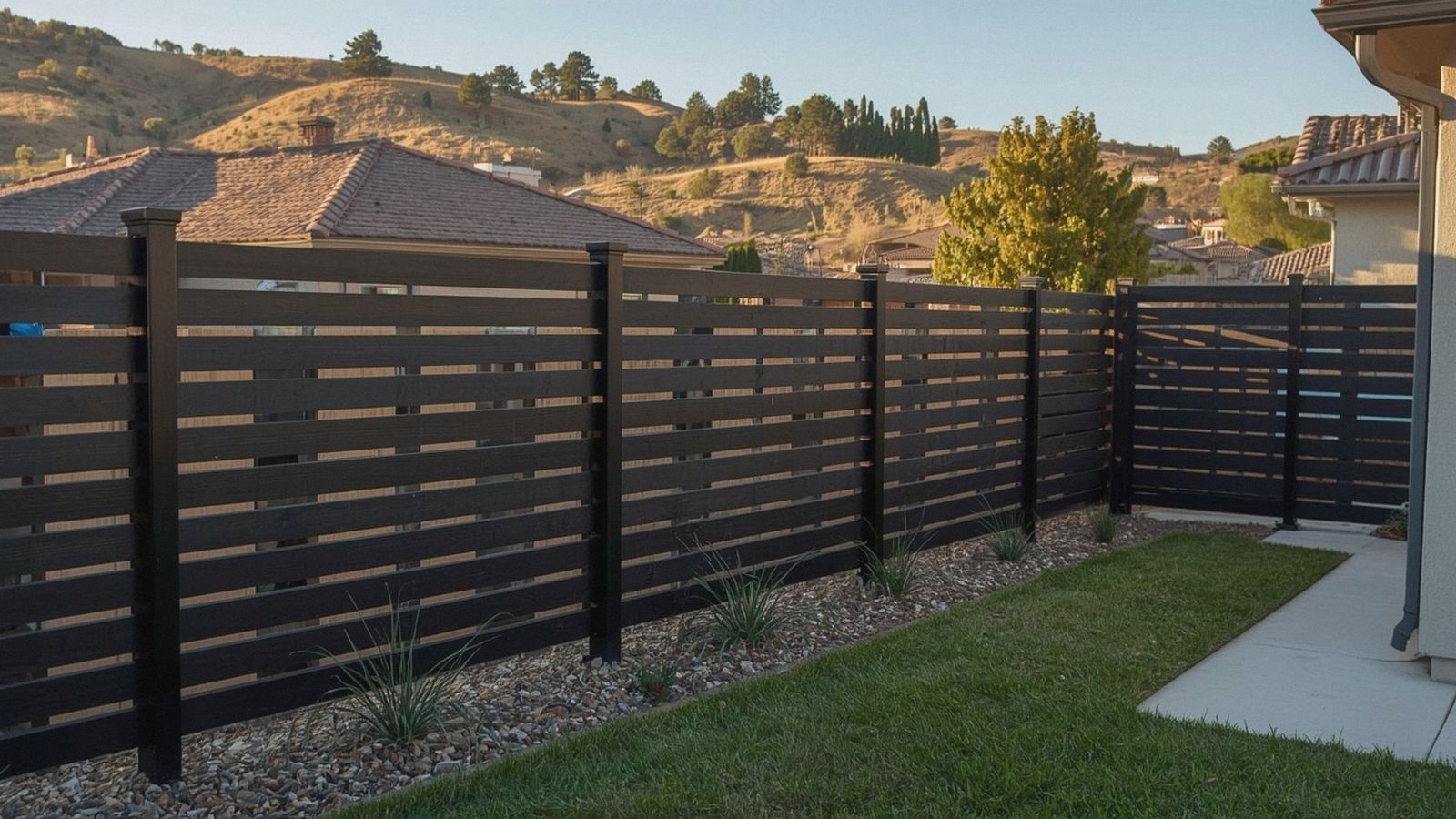
Fence Installation in San Ramon, Built Like Our Railings
As a San Ramon fence company that started with railings, we give every fence the same treatment as one of our railings: measured on site, drawn to the property line and the city's height limits, fabricated from steel or aluminum, and powder coated so it does not need restaining every few summers. Most of the fences we build replace a tired 6-foot wood fence along a side or back yard, add a low picket fence across a front yard, or close off a pool.
Metal makes sense here for practical reasons. Tri-Valley summers bake wood boards until they cup and gray, and many backyards sit against dry hillside grass. A powder-coated aluminum or steel fence holds its line, does not rot at the posts and does not burn. You get a written price range after a free on-site measure, and we aim to schedule installs about a week after you approve the design; HOA review or a custom finish can add time.
Wrought Iron and Metal Fence Styles We Build
- Horizontal slat privacy fences. Aluminum or steel slats with narrow, even gaps between square posts. The modern look most San Ramon homeowners ask for, with privacy and a little airflow.
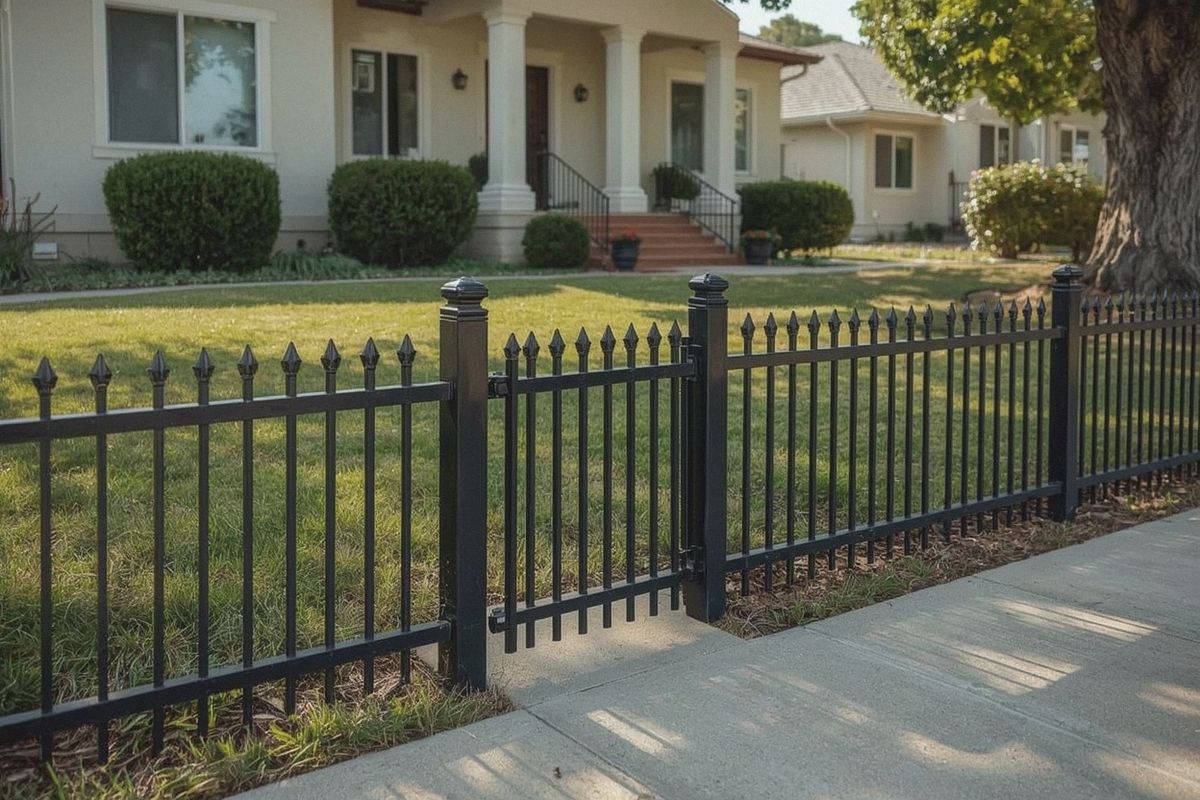
- Wrought iron, steel and aluminum picket fences. Flat-top, spear-top or rings-and-scrolls pickets for front yards, side yards and estate frontages, from 3-foot walkway fences up to full-height perimeter runs. See our wrought iron fences page for styles and pricing.
- Steel frames with wood or composite slats. Warm wood infill set in a welded steel frame, so the posts and structure never rot even when the boards eventually need replacing.
- View fences. Cable or welded-wire infill on steel posts for backyards that look out toward the hills or Mount Diablo.
- Pool enclosure fences. Picket fencing sized to the California pool barrier rules, paired with a self-closing, self-latching gate.
- Matching gates. Walk, side-yard and driveway gates built in the same pattern and color as the fence. See our custom gates page for more.
Fence Installation Cost in San Ramon
These are the planning ranges we use for installed metal fencing in the Tri-Valley. Bay Area labor and hillside access put local projects toward the upper half of national averages, and the firm price always comes after a free on-site measure.
| Fence type | Typical height | Installed per linear foot |
|---|---|---|
| Aluminum picket, powder-coated | 3 to 6 feet | About $55–$120 |
| Wrought iron or steel picket, ornamental | 3 to 6 feet | About $70–$150 |
| Steel frame with wood or composite slats | 6 feet | About $95–$190 |
| Horizontal aluminum or steel slat privacy | 6 feet | About $110–$220 |
| Cable or welded-wire view fence | 4 to 6 feet | About $75–$160 |
| Pool enclosure fence | 5 feet minimum | About $70–$150, plus code gate hardware |
Worked example: a typical San Ramon backyard with about 90 feet of side and back fence in 6-foot horizontal aluminum slats runs roughly $9,900 to $19,800 before gates. Taking out an old wood fence usually adds about $6 to $12 per foot. Slopes that need stepped panels, corner posts, concrete or retaining walls under the fence line, and a matching driveway gate move the number up. If the fence is shared with a neighbor, the cost is often split, which we explain below.
San Ramon Fence Height Rules
San Ramon's Permit Center spells out the basics. On the rear and side property lines of most lots, a fence can be up to 7 feet tall as long as the top foot is open lattice. Inside the front yard setback, which is typically the first 20 feet back from the front property line, fences are limited to 3 feet. Outside that front setback, a 7-foot fence is allowed. The city also warns that the edge of the sidewalk is not always the property line, so we confirm where the line actually sits before setting a post.
Under the California Residential Code, a fence 7 feet tall or less generally does not need a building permit, but zoning height limits, corner-lot visibility rules and retaining walls under the fence can still trigger city review. Many San Ramon neighborhoods also have HOA architectural review that controls fence style, height and color. We prepare the drawing and finish sample for the HOA submittal. Danville, Dublin, Pleasanton, Alamo and Walnut Creek each set their own limits, and we check the current rules for your address before drawing anything. See our San Ramon permit guide and HOA approval guide for how those reviews work.
Shared Fences and Your Neighbor
Most side and back fences sit on a shared property line. California Civil Code section 841, often called the good neighbor fence law, presumes that adjoining owners share responsibility for the reasonable cost of building, maintaining and replacing a boundary fence. Before starting, the owner planning the work is generally expected to give the neighbor written notice at least 30 days ahead, describing the problem, the proposed solution, the cost and the schedule.
We make that conversation easier. Your written estimate breaks out the shared run by length and cost, and the drawing shows which face of the fence each neighbor sees. Horizontal slat and picket fences look the same from both sides, which avoids the old argument over who gets the good side.
Hillside Lots, Clay Soil and Fire Season
- Slopes. On the sloped lots common in Dougherty Valley, Canyon Lakes and the Danville and Alamo hills, we either step level panels down the grade or rake the panels to follow it. Stepping keeps slats level; raking keeps the bottom gap even. We show you both on the drawing.
- Clay soil. Much of the Tri-Valley sits on expansive clay that swells in winter and shrinks in summer. Posts go into concrete footings dug deep enough to stay put through that cycle, which is what keeps a long fence line straight years later.
- Fire season. In 2026 the State Board of Forestry adopted Zone 0 rules for the first five feet around homes in the state's highest fire hazard zones, aimed at keeping combustible materials, including wood fencing, away from the house. San Ramon has no Very High zones on the current maps, but parts of Danville and the hills around Blackhawk do, and timing and details vary by city and fire district. You can check your address on the State Fire Marshal's map viewer. Wherever you live, a steel or aluminum fence, at least for the section that meets the house, keeps a wood fence from carrying fire to the walls. Our wildfire-resistant railing guide covers the fire hazard maps in more detail.
Pool Fences That Pass Inspection
When a pool or spa is built or remodeled at a California home, the Swimming Pool Safety Act requires drowning-prevention features, and an enclosure is one of the accepted options. The enclosure has to be at least 60 inches tall, with no openings that pass a 4-inch sphere and no footholds on the outside face that make it easy to climb. Gates must open away from the pool and close and latch on their own. We build pool fences with the structural rails on the pool side and draw every dimension before fabrication so the inspection is a formality. See our pool fences and pool gates page, or read the California pool gate and fence code guide for the full checklist.
How a Custom Fence Job Runs
1. Call or request a range
Tell us the length, height and style you have in mind and get a ballpark over the phone.
2. Free on-site measure
We walk the line, check the slope, the soil, the property line markers and any old fence that has to come out.
3. Drawing and written price
You get a drawing with heights, post spacing and gates, plus a written price. We prepare HOA paperwork and the neighbor cost split if you need them.
4. Fabrication and install
Panels and gates are built and powder coated, then installed. We aim to schedule about a week after you approve.
5. Walk-through
We check every gate swing and latch with you, and the old fence leaves with us.
Why Choose Us as Your Fence Contractor
Railing Shop Standards
We build fences with the same welded frames, post sizing and powder coat as our guardrails, so the fence stays square and the finish holds up to summer sun.
Drawn to the Rules First
Every drawing is checked against your city's height limits, the front setback and, for pools, the 60-inch enclosure rule before anything is cut. You find out about a problem on paper, not after the posts are set.
One Look Around the House
Because we also build railings and gates, your fence, side gate, front steps and deck rail can share one pattern and one color instead of looking like three different contractors.
Fence Installation Across the Tri-Valley
We build custom fences in San Ramon, Danville, Dublin, Pleasanton, Alamo and Walnut Creek. Related work: custom gates, aluminum railings, wrought iron railings, cable railings and HOA and condo work. Learn how we work or request a free estimate, or call (925) 438-6219.
Questions, Answered
Straight answers on cost, code, permits and materials. Still unsure? Call and ask.
How tall can a fence be in San Ramon?
On the side and rear property lines of most lots, San Ramon allows a fence up to 7 feet tall if the top foot is open lattice. Within the front yard setback, typically the first 20 feet from the front property line, the limit is 3 feet. HOA rules can be stricter, so we check both before drawing your fence.
Do I need a permit to build a fence in San Ramon?
A fence 7 feet tall or less generally does not need a building permit under the California Residential Code, but it still has to meet the city's height and setback rules. A retaining wall under the fence, a corner-lot visibility triangle or a pool enclosure can bring in city review, and many neighborhoods need HOA approval. We tell you which applies at the on-site measure.
Who pays for a fence on a shared property line?
California Civil Code section 841 presumes neighbors share the reasonable cost of building and maintaining a boundary fence, and the owner starting the work is generally expected to give 30 days' written notice. Your estimate breaks out the shared run so the cost split is easy to show your neighbor.
Is aluminum or steel better for a fence?
Aluminum does not rust, weighs less and suits most horizontal slat and picket fences, especially near pools and sprinklers. Steel is stronger and stiffer, so it fits ornamental picket designs, wide gates and fences that also hold back a slope. Both are powder coated, and we often mix them, with steel posts and gates and aluminum infill.
How long does a custom fence take?
We aim to schedule installs about a week after you approve the design. Time on site depends on length, slope and whether an old fence has to come out; a typical backyard run takes a few days. HOA review, custom finishes or a pool inspection can add time, and we tell you up front if they apply.
Ready to get started?
San Ramon Custom Railing designs, fabricates and installs custom railings across San Ramon, CA and the Tri-Valley. Licensed and insured, drawings checked against California code, and permit and HOA paperwork handled for you.