
Pool Fences & Pool Gates in San Ramon, CA
Measured free. Drawn to the pool barrier rules.
Aluminum and steel pool fences with self-closing, self-latching gates, built to the California pool barrier rules and drawn before fabrication so the inspection is a formality.
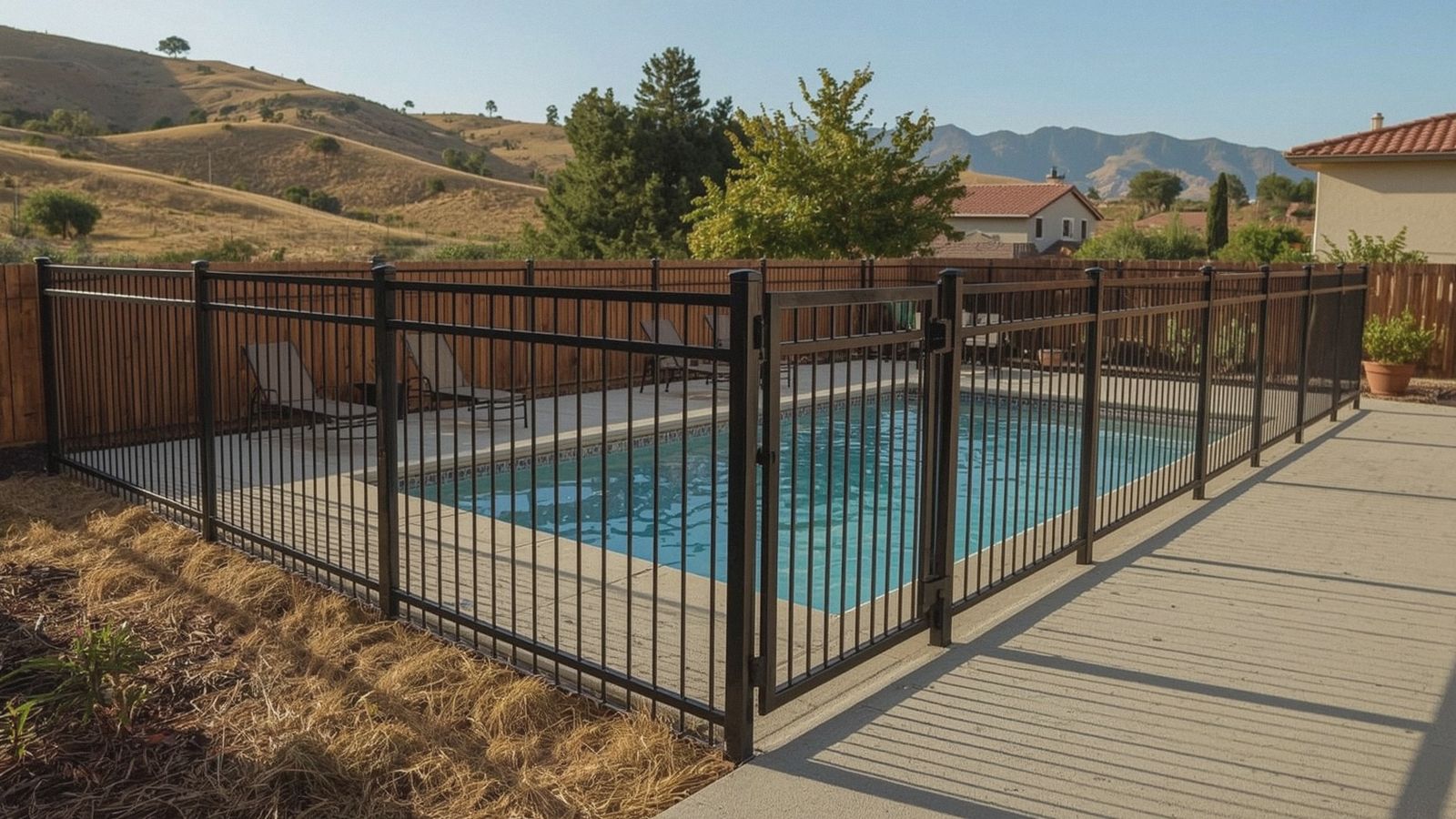
Pool Fence Installation in San Ramon
A pool fence has two jobs: keep small children out of the water and pass the building inspection that comes with a new or remodeled pool. We build permanent pool fences and pool gates in powder-coated aluminum and steel, sized to the California pool barrier rules and styled to match the rest of the yard, so the enclosure looks like part of the house instead of a temporary barrier.
Backyard pools are common in the single-family neighborhoods of San Ramon, Danville, Pleasanton and Dublin, and many of them were built before today's barrier rules. If you are building a new pool, remodeling an old one, or simply want a safer yard for grandchildren, we can measure the layout and give you a written price after a free on-site visit.
When California Requires a Pool Barrier
California's Swimming Pool Safety Act, Health and Safety Code section 115920 and the sections that follow it, applies when a building permit is issued for a new pool or spa, or for a remodel of an existing one, at a private single-family home. Since January 1, 2018, those pools need at least two of seven drowning prevention features. An enclosure that isolates the pool from the house is one of them, and it is the one that works without anyone remembering to close a cover or arm an alarm.
Many families pair a permanent pool fence with door alarms or self-closing door hardware as the second feature. Local building departments can add their own detail, so we confirm the current requirements for your city before drawing the fence. Our California pool gate and fence code guide lists all seven features.
Pool Fence and Gate Requirements
| Requirement | What the rule says |
|---|---|
| Enclosure height | At least 60 inches, measured on the side away from the pool |
| Gap at the bottom | No more than about 2 inches between grade and the bottom of the fence |
| Openings | No opening that passes a 4-inch sphere |
| Climbability | Outside face free of handholds and footholds a young child could use |
| Gate swing | Opens outward, away from the pool |
| Gate closing | Self-closing, with a self-latching device |
| Latch height | Release placed no lower than 60 inches above the ground |
These are the core numbers from Health and Safety Code section 115923, as restated in Pleasanton's pool handout. The California Residential Code adds more detail, including when a latch can sit lower on the pool side of the gate.
Pool Fence Styles and Materials
- Aluminum picket pool fences. The most popular choice: rust-free around splash and chlorine, flat-top or spear-top pickets, black or bronze powder coat.
- Steel and wrought iron pool fences. Heavier pickets and decorative tops for estate yards, galvanized or zinc-primed under the powder coat. See wrought iron fences for styles.
- Glass pool fencing. Where the view matters most, frameless or framed glass panels can form the enclosure; see our glass railings page.
- Pool gates. Walk gates with spring hinges or a hydraulic closer and a pool-rated magnetic latch, built in the same pattern as the fence.
- Matching side-yard gates. If the side yard opens into the pool area, that gate becomes part of the barrier and gets the same hardware.
Pool Gate Hardware That Keeps Working
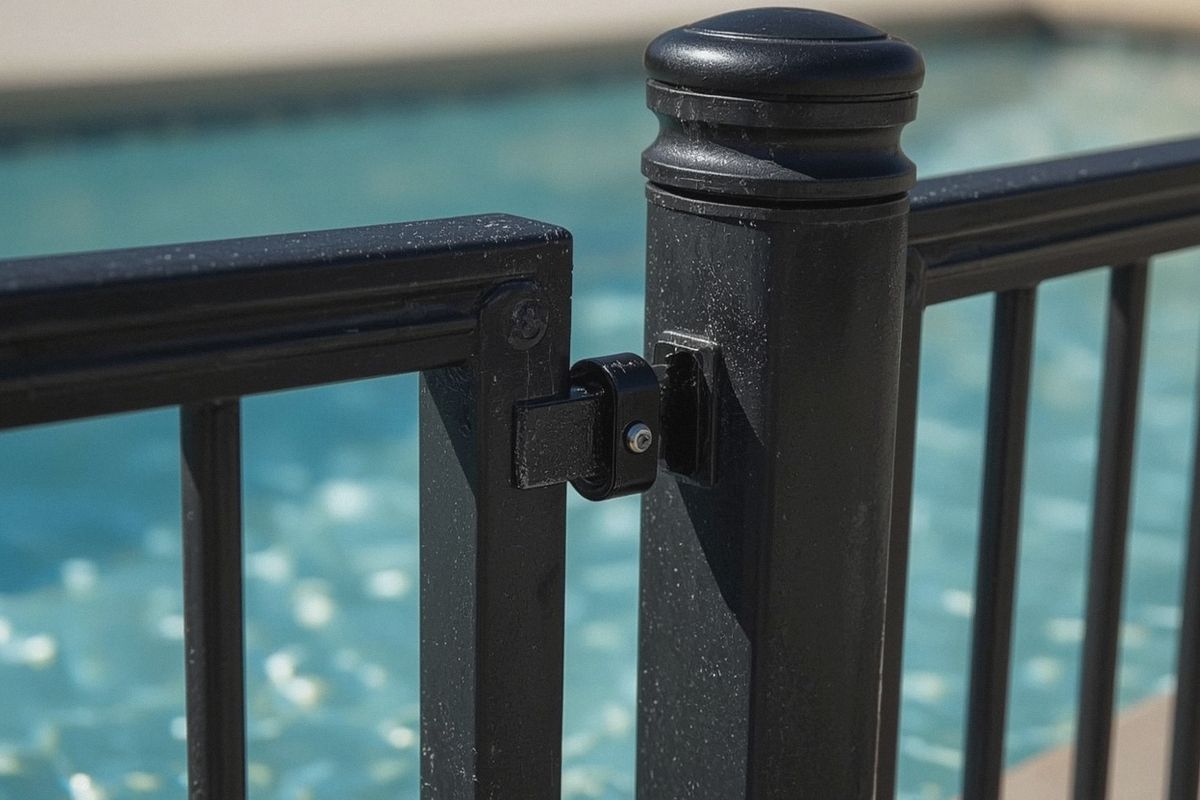
Most failed pool inspections, and most real safety problems, come down to the gate. A gate that sags will not latch, and a spring hinge that weakens lets the gate rest open. We size the frame, posts and closer to the weight of the gate and adjust it so it swings shut and latches from any open position. The latch release goes at the required height with room for a lock, and structural rails sit on the pool side so they do not become a ladder. Ask us to check an existing pool gate; re-hanging or new hardware is often all it needs.
Pool Fence Cost in San Ramon
| Item | Typical installed range |
|---|---|
| Aluminum picket pool fence, 5 feet | About $70–$120 per linear foot |
| Steel or wrought iron pool fence | About $90–$150 per linear foot |
| Pool gate with self-closing hinges and pool latch | Priced like a walk gate, plus the code hardware |
| Re-hanging or new hardware on an existing gate | Often a short service visit |
Worked example: about 80 feet of 5-foot aluminum pool fence around a typical Tri-Valley backyard pool runs roughly $5,600 to $9,600 before the gate. Sloped decks that need stepped panels, core drilling through thick pavers and decorative steel move the number up. The firm price comes after a free on-site measure.
Inspections and Timing
Building departments want to see the barrier installed and working before the pool is filled, so the fence often sits on the critical path of a pool project. We coordinate with your pool builder, measure once the deck layout is set, and aim to install about a week after you approve the design. You get a drawing showing heights, gaps, picket spacing, gate swing and latch height that you or your pool contractor can hand to the inspector.
How a Pool Fence Job Runs
1. Call for a range
Tell us the pool size and how the house and gates connect to the yard.
2. Free on-site measure
We walk the fence line, check the deck surface and plan where the gates go.
3. Drawing and price
A barrier drawing with every code dimension, plus a written price.
4. Fabrication and install
Panels and gates are built and powder coated, then installed and adjusted.
5. Gate test
We test every gate from fully open and half open with you before we leave.
Pool Fences Across the Tri-Valley
We build pool fences and pool gates in San Ramon, Danville, Dublin, Pleasanton, Alamo and Walnut Creek. Related work: wrought iron and metal fences, iron and driveway gates, aluminum railings and glass railings. Learn how we work or request a free estimate, or call (925) 438-6219.
Questions, Answered
Straight answers on cost, code, permits and materials. Still unsure? Call and ask.
How tall does a pool fence have to be in California?
A pool enclosure must be at least 60 inches tall, measured on the side away from the pool, with no more than about a 2-inch gap at the bottom and no openings that pass a 4-inch sphere. Your building department may add local requirements, which we confirm before drawing the fence.
Does a pool gate have to be self-closing?
Yes. A gate in a pool enclosure must open outward, away from the pool, and be self-closing and self-latching, with the latch release no lower than 60 inches above the ground unless it is set up on the pool side as the code allows. We size the hinges or closer so the gate latches from any open position.
Do I need a pool fence for an existing pool?
The state barrier requirement applies when a permit is issued to build or remodel a pool or spa at a single-family home. An existing pool that is not being remodeled is not automatically required to add one, but many owners do for young children or visiting grandchildren, and some HOAs and insurers ask for it.
Is aluminum or steel better for a pool fence?
Aluminum is the usual choice because it does not rust around splash and chlorine and needs little upkeep. Steel is stronger and suits decorative wrought iron styles, and we galvanize or zinc-prime it under the powder coat for pool areas.
How much does a pool fence cost?
An aluminum picket pool fence typically runs about $70 to $120 per linear foot installed, and steel or wrought iron about $90 to $150. Around 80 feet of aluminum pool fence is roughly $5,600 to $9,600 before the gate. Slopes, pavers and decorative styles add cost.
Ready to get started?
San Ramon Custom Railing designs, fabricates and installs custom railings across San Ramon, CA and the Tri-Valley. Licensed and insured, drawings checked against California code, and permit and HOA paperwork handled for you.